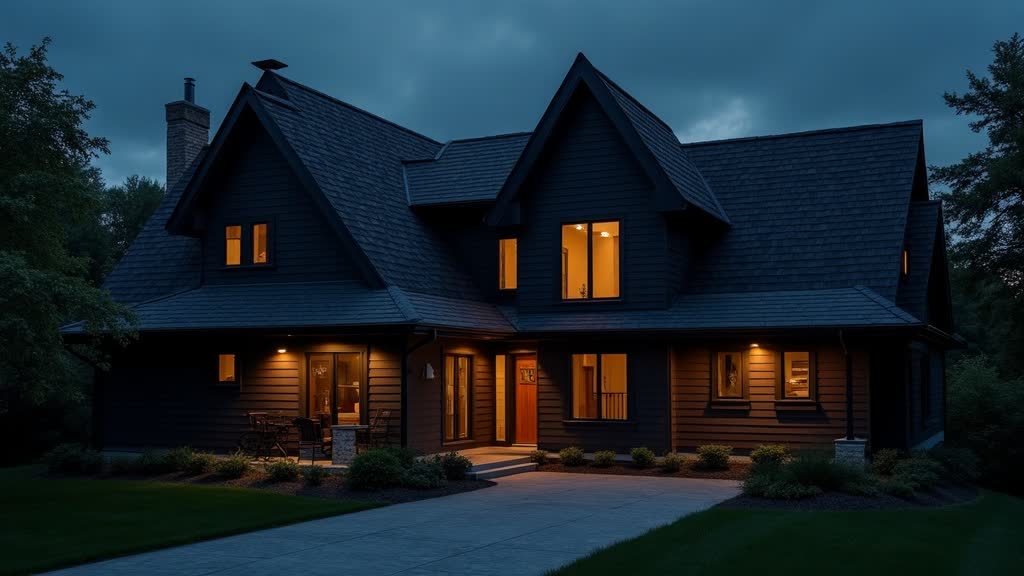
Storm Damage Roof Repair in Pinellas Park, FL:
Wind Damage, Found and Fixed.
Storm damage roof repair in Pinellas Park, where the threat is wind, tornadoes and hard rain more than surge. We stop the active leak, inspect every slope, and hand you a dated photo report you can share. We file the permit in our name, and the finished work carries our written 15-year workmanship warranty.
Takes about 30 seconds. A local roofing specialist follows up the same business day.
Storm Damage in Pinellas Park Comes Inland: Wind, Tornadoes and Rain
Hurricane Helene’s damage in Pinellas County was mostly storm surge on the coast, along the beaches and the bay shore. Pinellas Park sits in the middle of the peninsula, and a FEMA flood map check finds no VE coastal wave zones inside city limits. The storms that wreck roofs here come by air: straight-line wind, the tornadoes that spin out of squall lines, and rain heavy enough to find any gap a gust opened.
The city has its own proof. On October 3, 1992, an F3 tornado crossed the northern part of Pinellas Park. The city’s own account says it devastated both residential neighborhoods and industrial buildings near Pinellas Park High School. A police spokesman put the toll at more than 100 homes severely damaged or destroyed, with Autumn Run and Beacon Run among the neighborhoods named in coverage. Steel salvaged from the wreckage later went into the band shell at England Brothers Park, built to be hurricane resistant.
Then in December 2020, a tornado hit Elmhurst Drive. That was the same street the 1992 storm had struck, 28 years earlier. Lightning rarely strikes twice, but wind did here. Storm damage roof repair in Pinellas Park is mostly about wind, and a roof can get hit hard on a day with no hurricane anywhere close.
Pinellas Park's Storm Record
- October 3, 1992
- F3 tornado across the north end of the city, near Pinellas Park High School
- Homes hit in 1992
- More than 100 severely damaged or destroyed, per a police spokesman
- December 2020
- A tornado hit Elmhurst Drive, the same street struck in 1992
- Milton, October 2024
- 15.03 in. of rain at the Pinellas Park 1.7 ENE gauge
- Coastal flood zones
- No VE (wave) zones in the city; AE, A and AH areas exist
What a Tornado or Squall Line Leaves Behind
Tornado damage is uneven. One house loses half its shingles and the one next door looks untouched. Even on a single roof, the north slope can be stripped while the south slope looks fine. That is why we walk every slope after a wind event instead of judging the roof from the driveway.
Flying debris adds its own damage. Branches, fence boards and loose gutters punch holes, crack shingles and tear through flashing. A single puncture the size of a coin can let in gallons over a few storms. On commercial and industrial buildings in the city, the same winds peel roof edges and lift membrane seams. Our commercial roofing and flat roofing pages cover those systems.
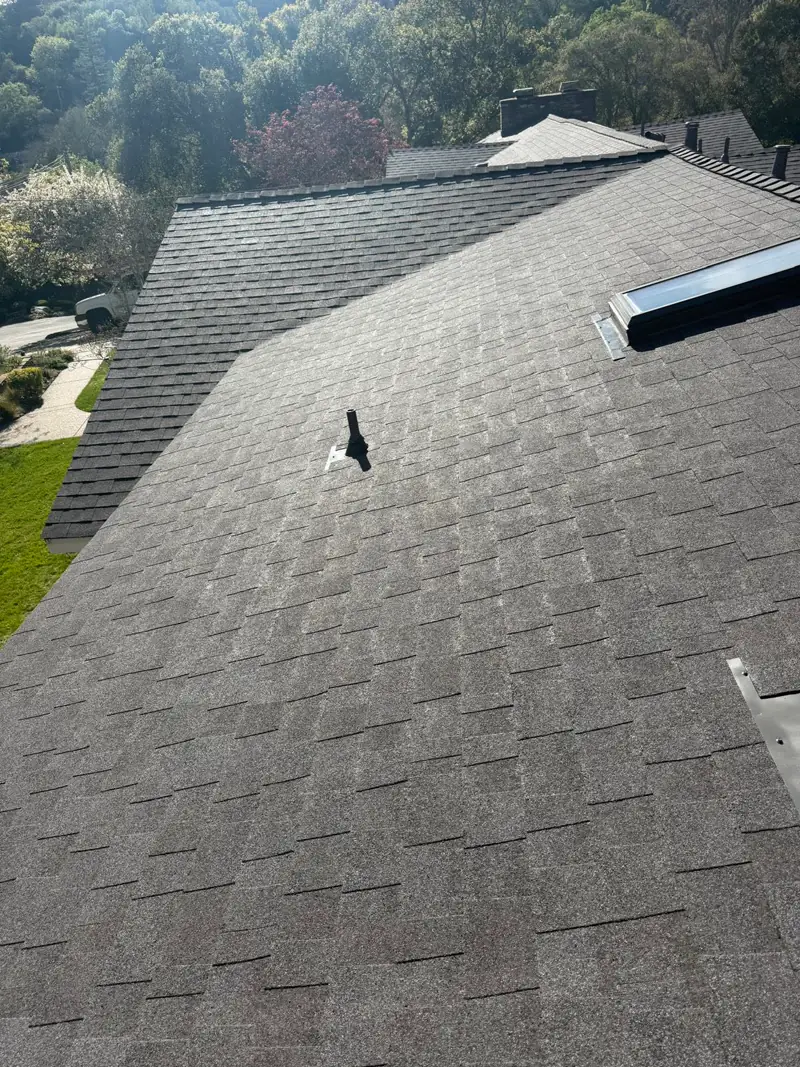
What Wind Does to Pinellas Park’s 1970s and 1980s Roofs
The median home in Pinellas Park was built in 1978, and homes from the 1970s and 1980s make up about half the city’s housing, per 2020 to 2024 Census estimates. Most of those houses are on their second or third roof by now. The deck, the nailing pattern and the flashing details often still date to the original build, and the shingles on top may be near the end of their life.
Wind finds the weak points on that kind of roof in a set order:
- Lifted tabs. Air flowing over the roof pulls up on each shingle. When the adhesive strip has dried out with age, a gust lifts the tab. Sometimes it drops back flat and you can’t see it from the ground.
- Creased shingles. A tab that flaps hard enough bends across its width and leaves a crease. The shingle may still be in place, but the mat is broken along that line and it won’t seal again.
- Edges and corners first. Uplift is strongest at the eaves, the rakes and the corners. Older drip edge bends back, and once it does, the wind gets under the first course.
- Flashing. Wall flashing, vent boots and chimney flashing work loose. Thirty-year-old sealant at these joints cracks when the roof flexes in a gust.
- Ridge caps. The ridge sits in the fastest-moving air on the house. Caps crack, lift or blow off entirely, leaving the top of the roof open.
A lot of this damage is quiet. Creased and unsealed shingles still look like shingles. If you live through a hard blow and want a full answer, a roof inspection covers each slope, the attic and the flashing, not just the part visible from the yard.
Milton’s Rain and the Leaks That Show Up Later
Wind opens the gap. Rain does the damage. During Hurricane Milton in October 2024, a CoCoRaHS gauge in Pinellas Park recorded 15.03 inches, the fifth-highest total on the National Weather Service Tampa Bay list. Modeled weather data puts the city’s yearly rain at about 49 inches, so Milton dropped close to a third of a year’s rain in one storm.
Rain on that scale gets under lifted tabs and through loose flashing fast. Water can run along the decking for a few feet before it drips, so the stain on the ceiling is often not under the hole. Wet plywood softens. Attic insulation holds moisture against the wood. If nobody catches it, the deck starts to rot, and a repair that would have been a few bundles of shingles becomes a section of new decking.
Hidden storm damage also shows up late. A shingle that lost its seal in a September storm may hold through a few light rains and then leak in the first heavy one. If a stain appears weeks after the wind, it is worth tracing. Our roof leak repair page explains how we follow water back to where it enters.
The First Hours After a Storm Passes
What you do before anyone climbs the roof matters. Keep it short:
- Stay off the roof. Wet shingles are slick and soaked decking can give way.
- Photograph everything with the date showing. Shingles in the yard, a bent gutter, a spot on the ceiling, debris on the roof. These are the first record of the storm.
- Catch the water. Buckets, towels, and anything electrical moved away from drips.
- Write down when it started. A drip that began during the storm is easier to tie to it.
- Report it to your insurer if you plan to claim. That conversation is yours.
Then send us your address. When water is coming in, we stop the active leak first. We measure the roof from high-resolution satellite imagery before we arrive, so the visit goes to the damage itself.
The First Hours After the Storm
- Keep off the roofWet shingles and soft decking are a fall waiting to happen
- Take dated photosShingles in the yard, bent gutters, new ceiling spots, anything that moved
- Catch the waterBuckets and towels down, electronics and rugs moved away
- Note the time it startedWhen a drip began helps tie it to a storm
- Call your insurer if you plan to claimThe claim is yours to open and manage
Storm Damage Roof Repair Permits in Pinellas Park
Inside city limits, roof permits come from the city’s Building Development Division at 6051 78th Avenue N. Under the Post-Storm Recovery Permitting Plan, in effect since May 1, 2026, roof replacement and substantial roof repairs need a permit. Temporary tarping or a waterproof covering can go on without one, unless the Building Official decides otherwise.
After a declared emergency, the Building Official can authorize emergency roofing permits and priority handling for storm work, and the city takes paper applications when power or internet is down. Inspections stay in person. The city’s inspection guide calls for a Dry In inspection on roofing work and lists a Building Sheathing inspection for roof deck nailing. We pull the permit in our name, book the inspections and handle the cleanup.
Not every Pinellas Park mailing address is in the city. Some parcels are unincorporated county land, and those go through Pinellas County’s permit office instead. Search your address on pcpao.gov to see which side of the line you are on. Our Lealman and Kenneth City pages cover two of the nearby areas.
Storm Work Permits in the City
- Who issues them
- Building Development Division, 6051 78th Avenue N
- Needs a permit
- Roof replacement or substantial roof repairs
- No permit needed
- Temporary tarping or waterproof covering, unless the Building Official decides otherwise
- Roof inspections
- Dry In, plus Building Sheathing for roof deck nailing
- County addresses
- Look up the parcel on pcpao.gov; unincorporated land goes to Pinellas County
The 50% Flood Rule for Pinellas Park Homes
Pinellas Park is inland, but parts of the city still sit in FEMA flood zones, with Zone AE, Zone A and Zone AH areas inside or touching city limits. In those zones, the city’s flood rules apply to storm repairs, including roof work.
The city’s line is 50%. Under Section 18-2-802 of the Land Development Code, a building is substantially damaged when restoring it would cost 50% or more of its market value before the damage. Three details matter for a roof:
- Damage of any origin counts. A roof torn up by wind is included, even though no water came over the ground.
- Market value excludes land. It comes from an independent appraisal within six months, or from the Property Appraiser’s value adjusted by its factor.
- It is counted per permit. The code says improvement costs “shall not be cumulative from permit to permit.” That is different from St. Petersburg and unincorporated Pinellas County, which use 49%.
Cross 50% and the building has to meet current flood standards, which is a much bigger job than a roof. For a flood-zone home that took heavy wind damage, it pays to know the numbers before signing anything. The city’s Community Planning Division, (727) 369-5631, can give a Letter of Determination and Base Flood Elevation help.
Substantial Damage in a Pinellas Park Flood Zone
When a Storm Repair Turns Into a Roof Replacement
Plenty of storm damage is a normal roof repair: a row of tabs along one eave, a ridge run, a vent boot, one torn valley. Some of it means the roof is done. Florida’s code draws part of that line for you.
Section 706.1.1 of the Florida Building Code, Existing Building, says no more than 25% of a roof or roof section can be repaired, replaced or recovered in any 12-month period unless the whole roof or section is brought up to current code. State law carves out an exception: if the existing roof was put on under the 2007 Florida Building Code or later, only the repaired part has to meet current code.
With a 1978 median build year, almost every Pinellas Park home started life before the 2002 statewide code. What matters is when the current roof went on. A roof replaced in the 1990s gets no help from the exception, and a large storm repair on it can tip the job into a full replacement. A roof replaced after 2007 can usually take a bigger repair.
Other signs we are looking at a new roof:
- Damage spread across several slopes, not one corner.
- Soft or stained decking in more than one spot.
- Shingles so dried out that new ones won’t seal to them.
When roof replacement is the honest answer, we tear off to the deck, replace rotten wood and install a secondary water barrier. We buy direct from manufacturers, and every part of the new roof comes as a matched system from one manufacturer. You get Good, Better and Best options to compare and sign from your phone, the price locks once we send the proposal, and monthly payments are an option.
Your Documented Photo Report After the Storm
Every storm inspection ends with a dated photo report. It covers every spot the storm hurt: lifted tabs, bent drip edge, loose flashing, the attic deck if we can get to it, and the hidden layers you never see once a roof is finished. It goes into your homeowner portal with the roof measurements and our notes.
You can share it with your insurer, your mortgage company or anyone else who needs to see it. We don’t step into the claim. That stays between you and your insurance company, and what you send is up to you. Our part is a clear record of what the roof looked like after the storm and what it needs now.
The portal carries the rest of the job too: your schedule, photos as work goes on, permit documents and a message thread with us. Nobody shows up to push a sale.
Our Storm Damage Roof Repair Process for Pinellas Park Homes
- 01
Measured First
We measure your roof from high-resolution satellite imagery before anyone comes out.
- 02
Free Inspection
We stop any active leak, then check wind and water damage on every slope and photograph it.
- 03
Report in Your Portal
The dated photo report is yours to keep and share.
- 04
You Choose the Fix
A repair, or a new roof with Good, Better and Best options side by side, signed from your phone.
- 05
Permitted and Warrantied
We pull the permit under our own name and schedule the city inspections. Cleanup is part of the job. Your written 15-year workmanship warranty sits on top of the manufacturer’s coverage.
Roof Copilot holds Florida certified roofing contractor license CCC1336568 and carries liability and workers’ comp coverage. Storm work in Pinellas Park covers residential roofing on shingle, tile and metal roofs, plus commercial buildings along the city’s corridors.
Roofs We're Proud Of

Year workmanship warranty in writing, added on top of the manufacturer's warranty that covers your materials.
We file each permit ourselves and build every roof to the Florida Building Code. There's no form for you to fill in.
The old roof leaves with us, and a magnet goes over the lawn and driveway before the crew heads out.
Florida certified roofing contractor CCC1336568, insured for liability and carrying workers' comp.
Payment options by the month mean the roof can be replaced now and the cost spread out.
Storm Damage Roof Questions in Pinellas Park
Does a Storm Repair on My Pinellas Park Roof Need a Permit?
Roof replacement and substantial roof repairs do, under the city's Post-Storm Recovery Permitting Plan. A temporary tarp or waterproof cover can go on without one unless the Building Official says otherwise. We pull the permit for the lasting repair in our name.
Will You File or Negotiate My Insurance Claim?
No. The claim is between you and your insurer. We give you a dated photo report of the damage and a plain answer on repair versus replacement, and you decide who sees it.
The Storm Was a Week Ago and the Roof Looks Fine. Should I Still Have It Checked?
If the wind was strong, yes. A shingle can unseal, lift and settle back flat. It often looks normal from the yard until a heavy rain finds the gap. A new ceiling spot after a dry stretch is a common sign.
Does Wind Damage Count Toward the 50% Flood Rule?
It can. The city defines substantial damage as damage of any origin, so a roof torn up by wind counts if the home is in a flood zone. Pinellas Park measures each permit on its own rather than adding them up over the years.
My Address Says Pinellas Park. How Do I Know the City Issues the Permit?
Search the parcel on pcpao.gov. Some Pinellas Park mailing addresses sit on unincorporated county land, and those permits come from Pinellas County instead. We file with whichever office has the parcel.
Can I Just Replace the Damaged Part of an Older Roof?
Often, as long as the repair stays under a quarter of the roof in a 12-month span. Past that, the whole roof has to meet current code unless it was put on under the 2007 Florida Building Code or later. We check that before quoting.
My Roof Is Under 15 Years Old. Can My Insurer Refuse to Renew Over Its Age?
Not for age alone. State law says a roof younger than 15 years can't be the sole reason a homeowner's policy is refused or not renewed. Past 15, an inspection that shows five or more years of life left can keep age from being the only reason.

Get Your Pinellas Park Roof Measured, Free.
Enter your address. We'll handle everything else.