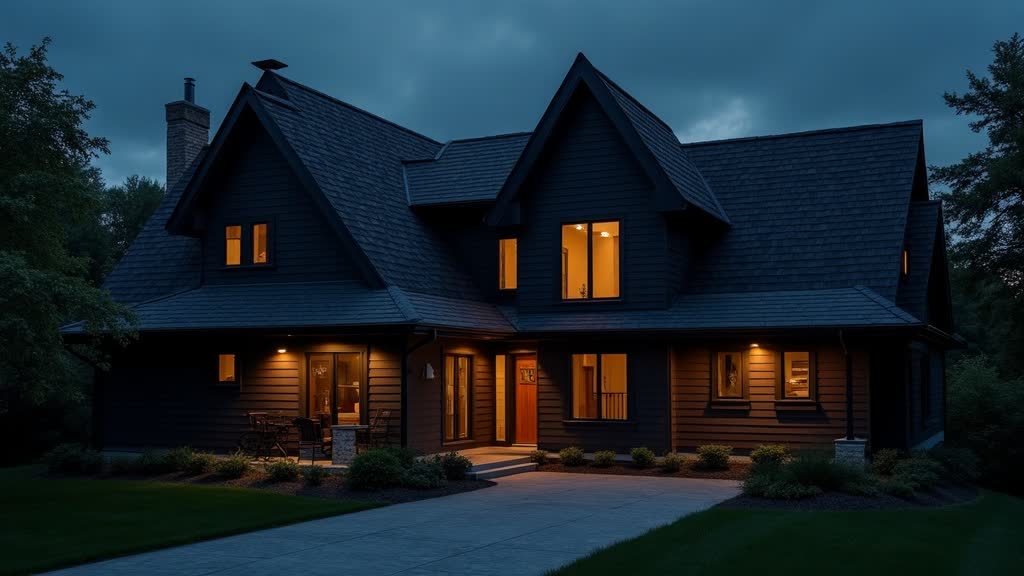
Roof Replacement in Pinellas Park, FL:
The Last Roof Your Deck Needs to Worry About.
Roof replacement in Pinellas Park, FL, for homes built in the 1970s and 80s that already carry a second or third roof. We strip it to the sheathing, swap out rotted wood, re-nail the deck and lay a secondary water barrier before a matched system from one manufacturer goes on. A 15-year workmanship warranty, in writing, covers our labor on top of the manufacturer's coverage.
Takes about 30 seconds. A local roofing specialist follows up the same business day.
Replacing the Second or Third Roof on a Pinellas Park Home
The 2020 to 2024 Census estimates show 16,871 Pinellas Park homes built between 1960 and 1989, about two out of three in the city. Asphalt roofs in Florida sun don’t last half a century. So by now, most of those houses have been re-roofed once, and plenty are on the third roof since they were built.
That history shapes the job. A roof replacement in Pinellas Park on a house this age is less about choosing a color and more about what earlier crews left behind. Some re-roofs in the 1980s and 90s were laid right over the original shingles. Others stripped the old roof but reused the same nail lines in the same sheathing. Gutters that ran over for years wet the bottom edge of the deck. Turbines and fans that came off were sometimes covered with shingles instead of new wood.
None of that is visible from the driveway. All of it is under the roof you have now.
What a Third-Roof Tear-Off Turns Up
- Two coverings, one deckA re-roof from the 1990s nailed straight over the original. Both come off
- Nail holes on nail holesSheathing fastened three times over holds less each time. It gets new fasteners in fresh wood
- Dark edges at the eavesGutters that overflowed for years soak the bottom course of wood. Soft runs are cut out
- Old vent openingsHoles left by turbines or exhaust fans that were roofed over, not decked over
Tear-Off to Bare Wood, Every Time
We don’t lay a new roof over an old one. Every covering on the house comes off, along with the felt or underlayment beneath it, until the crew is standing on bare wood. On a home with two coverings stacked up, that means two passes of tear-off, and the dumpster fills faster.
Once the deck is open, the wood gets checked across every slope. Soft or delaminated sheets come out and new sheathing goes in. Boards around old vent holes and at the eaves get the closest look, since that’s where Pinellas Park decks tend to fail first. The crew photographs every bad piece before it goes in the dumpster, and those photos land in your homeowner portal the same day. You see what was under your roof, not a summary of it.
Our roof inspection page explains how we read a roof from above and below before any of this, and it’s the free first step for most customers.
Re-Nailing and the Secondary Water Barrier
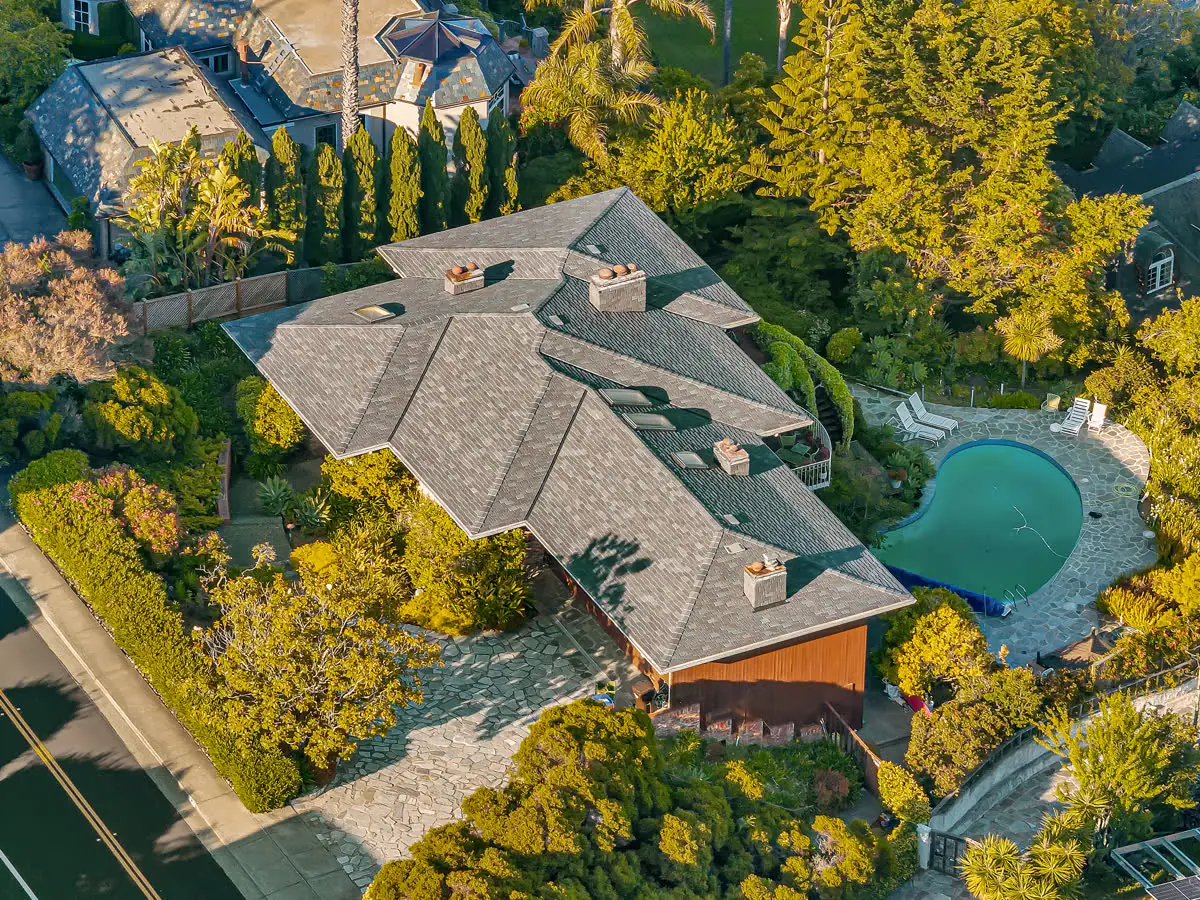
A deck that has held three roofs has a lot of old nail holes in it. New fasteners go into solid wood along the edges and across the field, bringing the sheathing up to the attachment pattern current code expects. Florida also requires a secondary water barrier whenever a roof covering is removed and replaced, so a sealed layer goes across the re-nailed deck before the finished roof. The shingle roofing page walks through the nailing pattern and the peel-and-stick membrane in detail, so we won’t repeat it here.
The barrier is the backup. If a storm peels part of the finished roof off, it keeps rain out of the attic until the damage gets fixed. Houses built before the statewide code often went decades without that layer. After that, new drip edge, flashing and pipe boots go on, then the roof itself.
Shingles, starter, ridge caps and underlayment from one manufacturer, built to work together
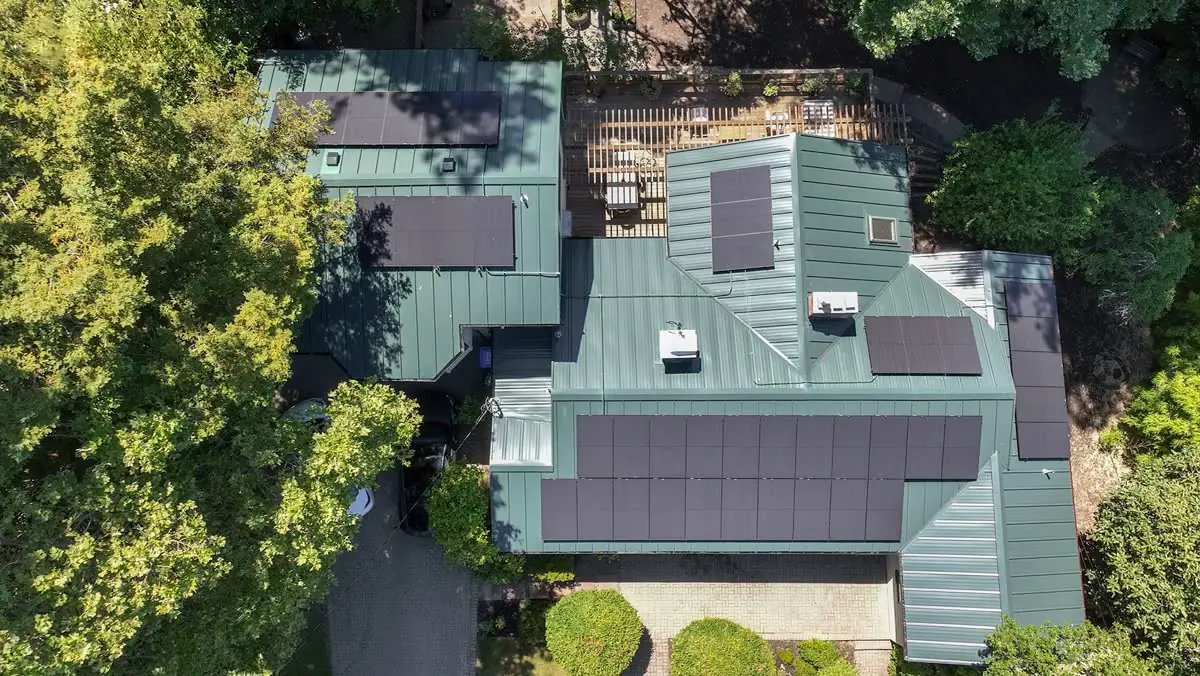
Standing seam panels on clips hidden under the seams, so no screws go through the roof surface
What the City’s Roof Mitigation Forms Record
The City of Pinellas Park posts two roof mitigation forms on its Forms and Applications page.
Roof Mitigation Verification, Deck Attachment records how the sheathing is fastened, measured against the Hurricane Mitigation Retrofit Manual, and confirms a secondary water barrier was installed under Florida Building Code Section 1507. It cites Florida Statutes 553.844.
Roof Mitigation Verification, Roof to Wall Connection records the straps and clips that tie the roof framing to the walls. It was revised on April 7, 2021, and its tables are built around 145 mph wind loads.
The forms list who is allowed to sign them: a licensed roofing, general, building or residential contractor, a 468 building inspector, or a Florida architect or engineer. Whoever signs, the facts they describe come from the deck. Our photo record of the nailing and barrier is the evidence of that work, and it stays in your portal. Roof-to-wall upgrades can be required on some re-roofs depending on the home’s value; the shingle page covers when.
The City's Two Roof Mitigation Forms
- Deck Attachment
- Deck fasteners per the Hurricane Mitigation Retrofit Manual, plus a secondary water barrier per FBC Section 1507
- Roof to Wall Connection
- Revised April 7, 2021, with fastening tables for 145 mph wind loads
- Who may sign
- A licensed roofing, general, building or residential contractor, a 468 building inspector, or a Florida architect or engineer
- Where to find them
- Forms and Applications on the city website
When a Roof Repair Becomes a Full Replacement in Pinellas Park
Florida’s Existing Building Code limits how much of an old roof can be patched. Under Section 706.1.1, once repair, replacement or recovering reaches more than a quarter of a roof or roof section within 12 months, that whole roof or section has to meet today’s code. In practice, that usually means a full replacement.
State law carves out newer roofs. Florida Statutes 553.844(5) says that if the existing roof was built, repaired or replaced under the 2007 Florida Building Code or a later edition, only the part being worked on must meet current code. Local governments can’t change that.
The date of your current roof decides which side you’re on. Most homes here were built well before Florida’s statewide code began in 2002, so the original roof never counts. What counts is when the present covering went on. A Pinellas Park ranch house re-roofed in 2011 can take a large repair. The same house re-roofed in 1997 may not, and a storm that tears up a third of one slope turns into a replacement conversation. When a roof repair is still the right call, we’ll tell you so.
How Much of a Roof Can Be Patched in a Year
City Permit or County Permit for a Pinellas Park Address
Every roof replacement needs a permit. The city’s post-storm permitting plan lists roof replacement as work that requires one, and the rule holds on a sunny day too. Who issues it depends on where your parcel sits, and the mailing address won’t tell you.
Inside city limits, the Building Development Division at 6051 78th Avenue N issues the permit. The city prefers electronic submissions through its online portal, and permit status and inspection results show up on its EnerGov Self Service site. The city says most permit applications are reviewed and issued within 10 business days once every required document is in. A Notice of Commencement gets recorded when the job calls for one, and we handle that too. Inspections are booked at least a working day ahead, and the city’s inspection guide says roofing must pass a Dry In inspection. A sheathing inspection that checks the roof nailing is on its list as well.
On unincorporated land, the permit comes from Pinellas County Building & Development Review Services instead. Annexation into the city is voluntary, so county pockets still sit among city streets with Pinellas Park addresses. Search your parcel on pcpao.gov to see which applies, or send us the address and we’ll check before filing. Neighbors just south should also read about roof replacement in Lealman, which is county land.
Either way, the permit goes in our name. We file the paperwork, book the inspections and close it out, and the closed permit is saved to your portal.
Where a Pinellas Park Re-Roof Gets Permitted
- Inside city limits
- Building Development Division, 6051 78th Avenue N, through the city's online portal
- Tracking
- Permit status and inspection results show on the city's EnerGov Self Service site
- Inspections
- Requested a working day ahead. Roofing must pass a Dry In inspection
- Unincorporated parcels
- Pinellas County Building & Development Review Services. Look up your parcel at pcpao.gov
Flood-Zone Homes and the 50% Rule, Counted Per Permit
FEMA’s flood maps show Zone AE, Zone A and Zone AH areas inside Pinellas Park. If your home sits in one, the city’s flood rules apply to the roof job too.
Under the city’s Land Development Code, a building is substantially improved when work costs 50% or more of its market value. Market value means the building only, not the land, taken from an independent appraisal or the Property Appraiser’s value adjusted by its factor. Cross that line and the building has to meet current flood standards.
Here’s the part that differs from St. Petersburg and the unincorporated county, which both use 49%. Pinellas Park says costs “shall not be cumulative from permit to permit.” Each permit is measured by itself. A re-roof on its own permit is judged on the roof’s cost, not added to a kitchen remodel from three years ago.
That doesn’t mean ignore it. If a roof and other large repairs end up on the same permit after a storm, the total matters. Your quote shows the roof figure in writing, so you can line it up against the building value before you decide. For questions about your elevation or zone, the city’s Community Planning Division handles Base Flood Elevation help. Storm-related roof work is covered on our storm damage roof repair page.
The City's Flood Threshold for a Re-Roof
Choosing the Roof That Goes On Next
A new roof is the one point where you can change materials without paying to tear off a roof that still has years left. Here’s how the options compare on a Pinellas Park house.
- Architectural shingles suit nearly every pitched roof in the city and give the most roof for the money. See shingle roofing.
- Metal costs more up front and lasts longer. See metal roofing.
- Tile is the heaviest option, so the framing has to be checked before it goes on. See tile roofing.
- Low-slope systems cover carports, porch additions and flat sections tied into the main roof. See flat roofing.
Whatever goes on, it goes on as a matched system from one manufacturer, so the material warranty treats it as one roof. We buy direct from manufacturers, so there’s no supply house markup baked into the price.
Good, Better and Best From Your Roof’s Measurements
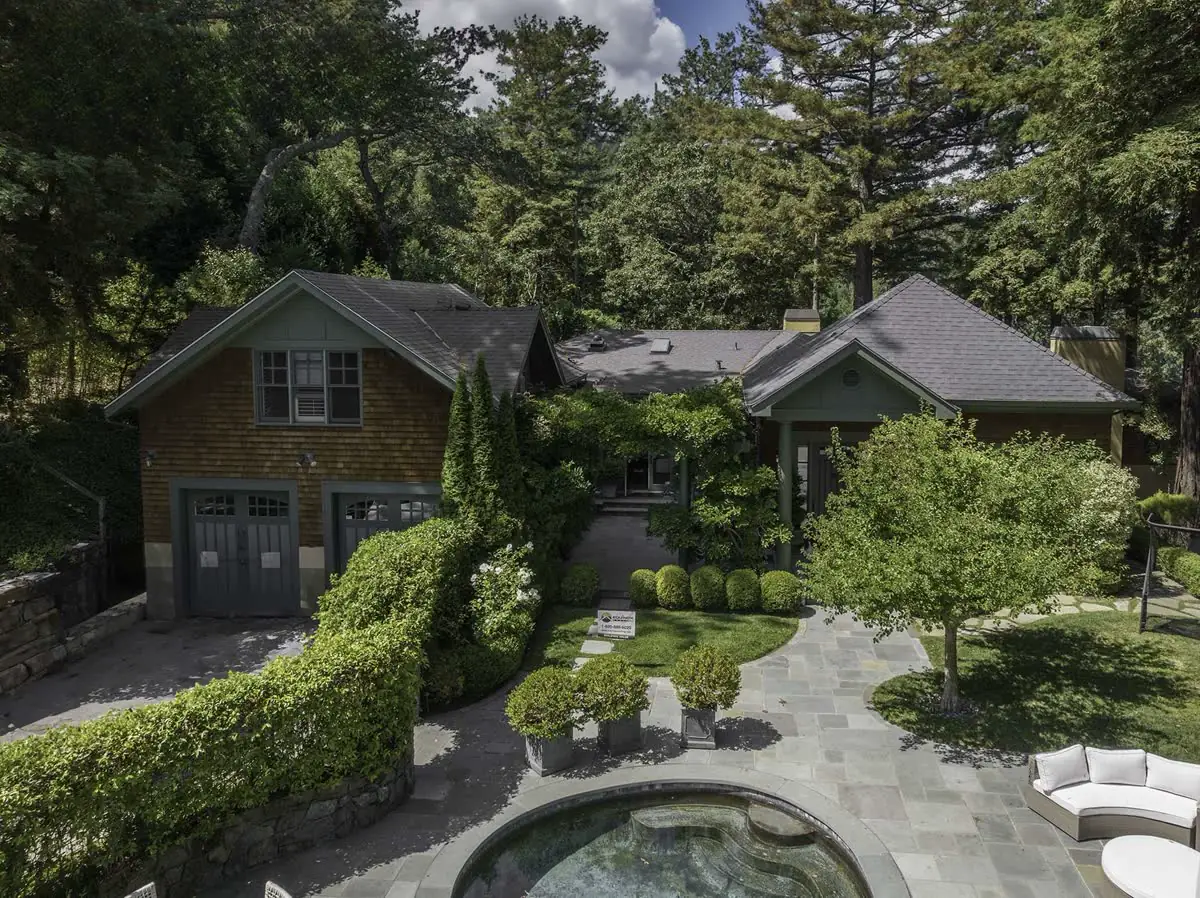
Pricing starts before the visit. We measure your roof from high-resolution imagery: each slope, its pitch, and the length of every ridge, hip, valley and edge. Those numbers drive the material counts and the tear-off, so all three options price the same roof and differ only in what goes on it.
The options arrive on your phone side by side as Good, Better and Best. You pick one and sign from the same screen. Once the quote is sent, the price is locked. Nobody shows up to sit at your table and push for a signature, and monthly payment options are listed next to each option.
Your Pinellas Park Roof Replacement in One or Two Days
- 01
Send the Address
We measure the roof from imagery and check whether the parcel is city or county.
- 02
Sign from Your Phone
Pick Good, Better or Best. The price is locked once it’s sent.
- 03
Permit Filed
We pull it in our name and book the inspections.
- 04
Tear-Off and Build
Old layers off, bad wood replaced, deck re-nailed, barrier down, new roof on. Most homes take one or two days on the roof.
- 05
Cleanup and Close-Out
The yard is cleared of nails and debris, the final inspection is passed, and photos, permit and warranty go into your portal.
The Warranty and What Stays in Your Portal
Every roof replacement we finish carries a 15-year workmanship warranty, written down and added to the manufacturer’s material coverage. If something we installed fails because of how it was installed, it’s on us.
The portal is where the rest of the job lives: the schedule, the photos of the hidden layers, the documents and your messages with us. Years later, when you sell the house or an insurer asks about the roof, the deck photos and closed permit are still there. Any insurance matter stays between you and your insurer, and the photo record is yours to share.
We’re a Florida certified roofing contractor, license CCC1336568, carrying liability and workers’ comp. Our crews also re-roof homes in Kenneth City, Seminole, Lealman and the other nearby towns, and every type of house we work on is on the residential roofing page.
What You Keep After the Crew Leaves
- Workmanship warranty15 years in writing, on top of the manufacturer's material coverage
- Closed permitThe final permit record from the city or county, filed in your portal
- Photo recordPictures of the deck, the barrier and every repair made under the new roof
- License and coverageFlorida certified roofing contractor CCC1336568, with liability and workers' comp
Roofs We're Proud Of

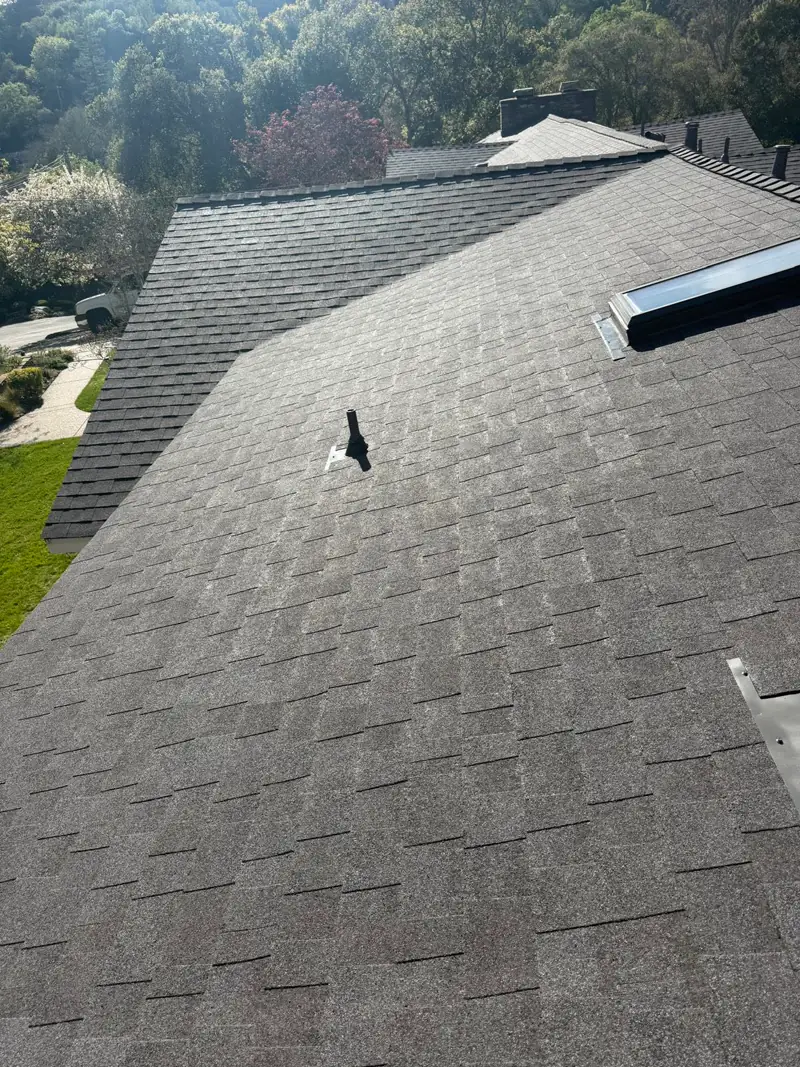
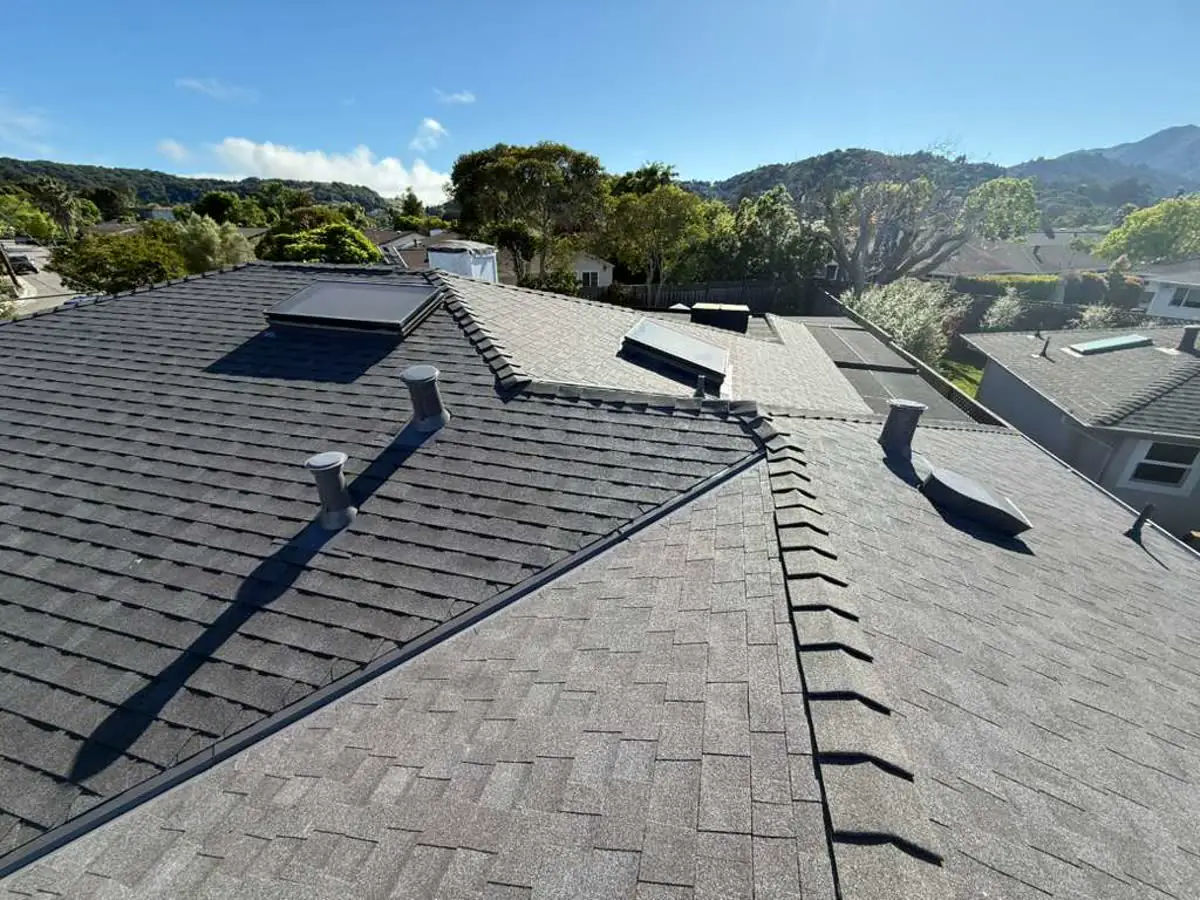
Year workmanship warranty in writing, added on top of the manufacturer's warranty that covers your materials.
We file each permit ourselves and build every roof to the Florida Building Code. There's no form for you to fill in.
The old roof leaves with us, and a magnet goes over the lawn and driveway before the crew heads out.
Florida certified roofing contractor CCC1336568, insured for liability and carrying workers' comp.
Payment options by the month mean the roof can be replaced now and the cost spread out.
Pinellas Park Roof Replacement Questions
My House Is on Its Third Roof. Does That Change the Job?
It adds tear-off time and usually more wood work. Every layer comes off, the deck is checked and re-nailed, and the price for that is set from your measured roof before you sign.
Can You Tell Me If My Roof Was Done to the 2007 Code?
Often, yes. The permit history for the address usually shows when the last re-roof was permitted. That date tells you whether a large repair can stay a repair or has to become a full replacement.
Do You Sign the City's Deck Attachment Form?
The form lists who may sign it, including licensed roofing contractors and Florida engineers. What we give every customer is the photo record of the deck nailing and the water barrier, which shows the work the form asks about.
My Address Says Pinellas Park but I'm Not Sure I'm in the City. Does It Matter?
It changes which office issues the permit, the city or Pinellas County. Search your parcel on pcpao.gov, or send us the address and we check before anything is filed.
Will a New Roof Push My Flood-Zone Home Over the 50% Line?
That depends on the building's value and on what else shares the permit. Pinellas Park counts each permit by itself, so your quote gives you the roof figure to compare against the building's market value.
How Long Until Work Starts?
The city says most permits are issued within 10 business days once the documents are complete. After that, most homes take one to two days on the roof.
Can I Spread the Cost Out?
Yes. Monthly payment options are available, and they appear beside each of the three options in your quote.

Get Your Pinellas Park Roof Measured, Free.
Enter your address. We'll handle everything else.